Cart
0
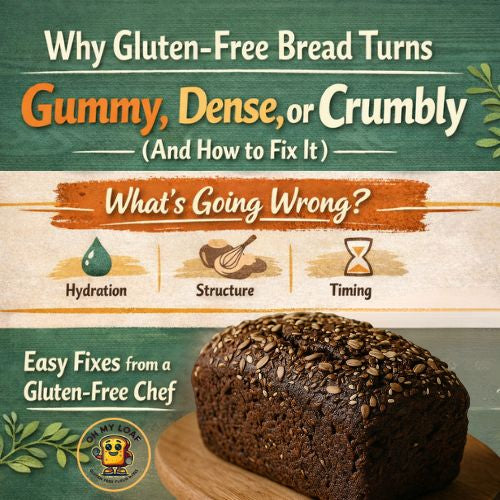
If you’ve ever pulled a loaf out of the oven and thought, “This looks amazing,” and then sliced it to discover a gummy center, a dense crumb, or a loaf that crumbles into sandwich confetti, you’re not alone. Gluten-free baking can feel like a prank… except nobody’s laughing when lunch falls apart.
Why Gluten-Free Bread Turns Gummy, Dense, or Crumbly (And How to Fix It)
As a vegan chef who’s tested more gluten-free doughs than I care to count, I’ve learned that most “fails” are not about your talent. They’re about a few predictable variables: hydration, structure, temperature, and time.
And once you understand those, the mystery loaf turns into something you can actually repeat.
The most common gluten-free bread texture problems

People often search phrases like gluten free bread gummy or gluten free bread dense because they’re trying to put a name to one frustrating thing: the texture didn’t set the way they expected. Here are the most common outcomes and what they usually mean.
-
Gummy or sticky inside
Sometimes you’ll see it described exactly as gluten free bread gummy, but it can also show up as sticky, wet, or “almost raw” in the middle.
What’s usually happening:
The center didn’t fully bake through, or the loaf retained too much moisture. Gluten-free breads often need a longer bake and a full cool-down to finish setting.
Fix it:
Bake a little longer than you think you should, and let the loaf cool completely before slicing. Cooling isn’t optional in gluten-free baking, it’s the final step of the bake.
-
Dense loaf (the “sad brick” effect)
If you’ve ever felt like you made a doorstop, you’ve met the gluten free bread brick problem. A dense loaf can also happen when gluten free bread won’t rise properly.
What’s usually happening:
Either the dough didn’t trap enough gas, or it couldn’t hold the gas it created. Yeast might be weak, proofing conditions may be too cold, or the dough structure isn’t strong enough.
Fix it:
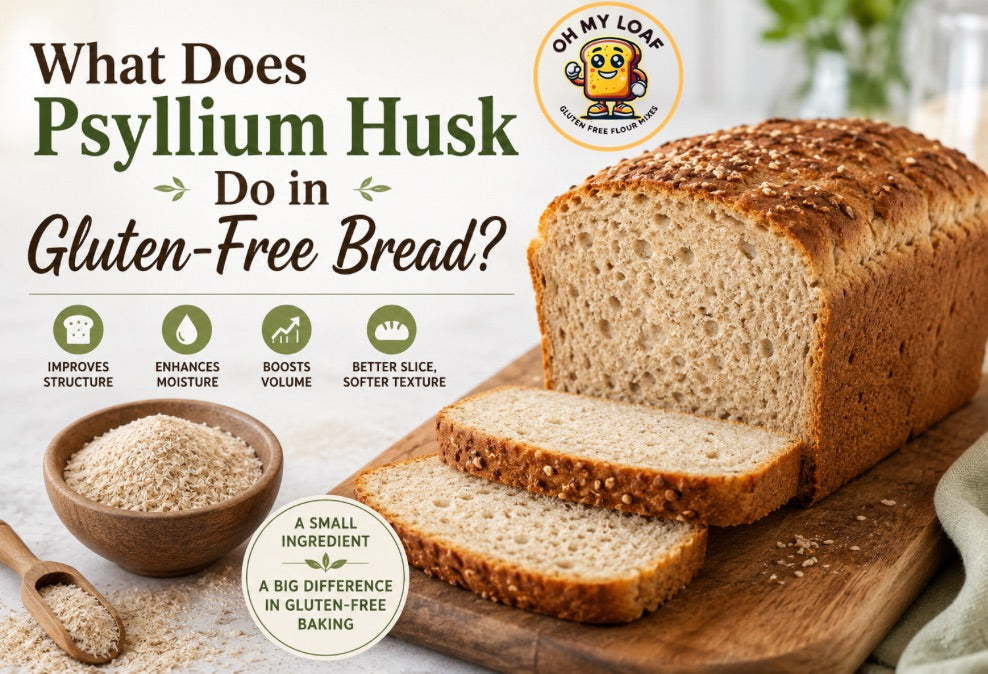
Use fresh yeast (if you’re making a yeasted loaf), proof in a warm spot, and make sure your dough has a structure builder like psyllium husk. Psyllium is one of the best “gluten replacements” for creating a flexible, sliceable crumb.
-
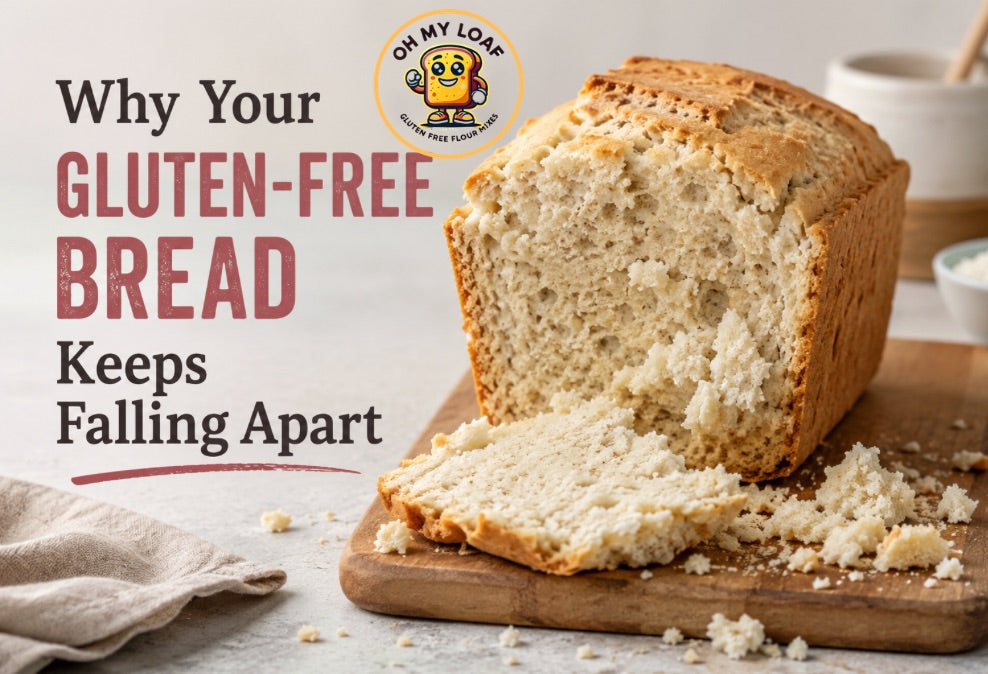
Crumbly slices or bread that falls apart
This is where people search things like gluten free bread crumbly or gluten free bread falls apart.
What’s usually happening:
Not enough binding and/or not enough moisture retention. It can also be caused by slicing too soon or storing bread incorrectly.
Fix it:
Add or increase binders (psyllium husk, ground flax, chia) and make sure the loaf is fully cooled before slicing. Store cooled bread wrapped or in an airtight container, and consider slicing and freezing for easy toasting.
-
Too dry
Gluten free bread too dry is often a hydration issue, but it can also be an oven or bake-method issue.
What’s usually happening:
Not enough water in the dough, too much bake time uncovered, or a flour blend that absorbs water aggressively.
Fix it:
Increase hydration slightly and bake covered longer before finishing uncovered. If you’re using a Pullman pan with a lid, a Dutch oven, or foil coverage, you’re helping the bread bake evenly without drying out.
-
Raw in the middle
gluten free bread raw inside is one of the most frustrating because the crust can look perfect.
What’s usually happening:
The oven is too hot, the loaf is too large for the bake time, or the bread was sliced before it finished setting.
Fix it:
Lower the temperature slightly and extend the bake time. Then cool fully. Gluten-free bread needs time to redistribute moisture and firm up.
-
Rubbery or rubber-band chew
Sometimes people call this gluten free bread rubbery, and it often feels like the bread is “bouncy” in a weird way.
What’s usually happening:
The binder-to-flour ratio can be too high, or the loaf is slightly underbaked so the gel structure never sets into a proper crumb.
Fix it:
Bake a bit longer and review your binder amount. The goal is structure, not a trampoline.
-
Soggy bottom or wet crumb
gluten free bread soggy can happen even when the top looks done.
What’s usually happening:
Steam got trapped, the loaf cooled in the pan too long, or it was stored before it cooled.
Fix it:
Cool on a rack, not in the pan. Let the bread breathe so moisture can escape.
The real “formula” for better gluten-free bread

Almost every texture issue comes back to four things:
-
Hydration
Gluten-free dough typically needs more water than wheat dough, but the sweet spot matters. Too little water and the loaf turns dry and dense. Too much and it stays gummy. For best results, use water equal to 100–120% of the total flour weight. -
Structure
Without gluten, you need something else to hold the loaf together. Psyllium husk is the MVP here, often supported by flax or chia. Use psyllium husk at 5–7% of the total flour weight. Always mix the psyllium husk with all of the water first, then add it to the remaining ingredients. -
Heat management
Covered baking early helps the center cook through. Uncovered baking at the end helps firm the crust and drive off extra moisture. Using a pullman baking form to one we offer works perfectly every time. Or simply cover tightly with foil.
Start baking at 425 degrees Fahrenheit or 220 degrees Ceslious for the first 45 minutes, remove foil or lids, and continue baking for another 25-40 minutes, depending on the density of the loaf. -
Time (including cooling time)
A gluten-free loaf isn’t finished when it leaves the oven. It’s finished when it cools and sets. Avoid slicing your bread too early.
My quick troubleshooting cheat sheet
If it’s gummy: bake longer + cool longer.
If it’s dense or won’t rise: check yeast freshness, proof warm, strengthen structure.
If it’s crumbly or falls apart: add binder, increase moisture slightly, cool fully before slicing.
If it’s too dry: increase hydration slightly and bake covered longer.
If it’s raw inside: lower temp, extend bake, cool fully.
If it’s rubbery: balance binder and finish the bake.
If it’s soggy: cool on a rack and avoid storing warm.
A simple path to consistent gluten-free bread
If you’ve been bouncing between complicated recipes and unpredictable results, I get it. That’s exactly why I created my Oh My Loaf bread mixtures: wholesome, plant-based, gluten-free blends built for real kitchens and repeatable results.
If you want to explore the mixes, you can start here: