Cart
0
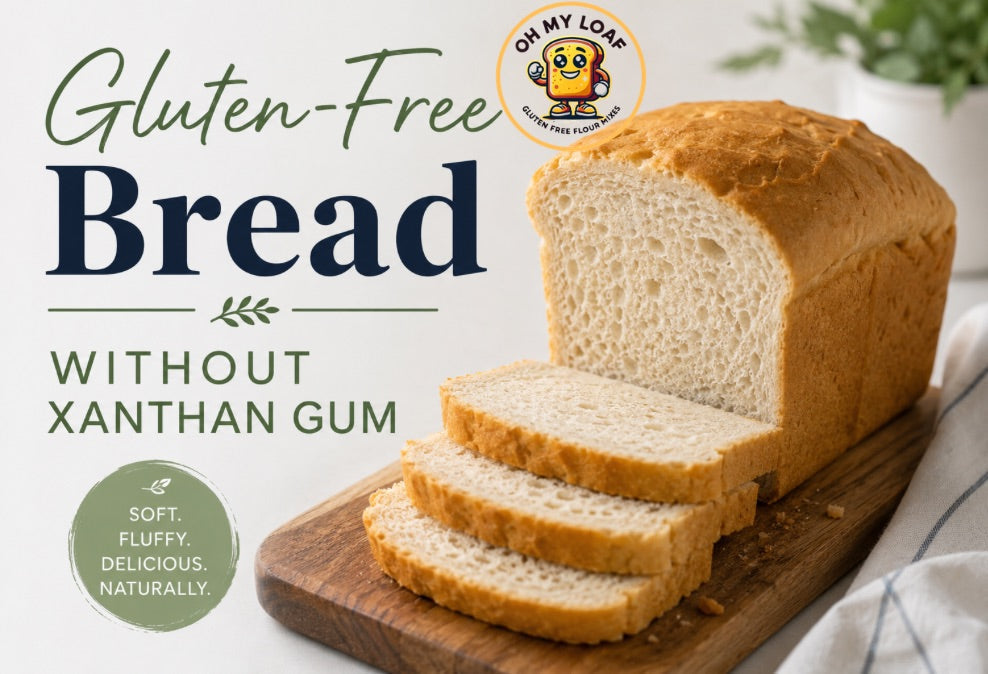
Gluten-Free Bread Without Xanthan Gum: Why We Skip It (and What We Use Instead)
Scan the ingredient list on most gluten-free bread mixes and you'll spot xanthan gum (or guar gum) almost every time. It's common for a reason — it works. But it's not the only way to get structure into gluten-free bread, and it's not what we use. Here's why, and what we rely on instead.
What Xanthan Gum Actually Does
Xanthan gum is a fermentation-derived thickener that helps gluten-free doughs hold together and trap air, similar to the role gluten normally plays. It's effective, shelf-stable, and used widely across the food industry — not just in gluten-free baking. There's nothing inherently wrong with it, and plenty of people bake with it happily.
That said, it's also a common source of digestive discomfort for some people, and a fairly divisive ingredient in the gluten-free community — some bakers notice a slightly slimy or gummy mouthfeel they'd rather avoid, and others are managing sensitivities that make gum-based ingredients unpleasant even in small amounts.
Why We Went a Different Direction
Our approach leans entirely on psyllium husk for structure instead. As we covered in our psyllium husk deep dive, it's a fiber that gels naturally when hydrated, giving dough enough elasticity to rise and hold its shape — without needing an added gum on top of it. Fewer ingredients doing more work, essentially.
This wasn't a marketing decision so much as a baking one: once we had the psyllium ratio dialed in properly, an additional gum wasn't solving a problem we still had. It just meant one more ingredient on the label that wasn't earning its place.
Does Skipping Gums Change the Texture?
Yes — and that's part of the point. Gum-based gluten-free bread and psyllium-based gluten-free bread aren't identical in texture. Gum-forward loaves often lean slightly more elastic and "stretchy," while psyllium-based bread tends to have a more traditional, tender crumb that's closer to what people expect from bread they grew up eating. Neither is objectively better — it comes down to preference and what you're using the bread for.
If you've tried gluten-free bread before and found the texture a little rubbery or gummy in a way you couldn't place, gum content is worth considering as one possible reason.
Is Xanthan Gum Actually Necessary for Gluten-Free Baking?
No — it's common, not required. Structure in gluten-free baking can come from several sources depending on the recipe: psyllium husk, ground flaxseed or chia (used as a gel, not for their fat content), or careful hydration and technique alone in some recipes. Xanthan gum is one tool among several, not a non-negotiable ingredient.
Quick Answers
Is gluten-free bread without gums harder to make? Not necessarily harder, but it does require getting your psyllium ratio and hydration right, since there's no gum acting as a backup for imprecise measuring. This is exactly why our gummy-middle troubleshooting guide comes back to psyllium so often — it's doing double duty.
Can I add xanthan gum to a psyllium-based recipe if I want to? You can, but it's not necessary and may change the texture in ways you don't expect — the two ingredients aren't designed to simply stack on top of each other. If you're curious, start with a small batch before committing a full loaf.
Is xanthan gum gluten-free? Yes, xanthan gum itself is gluten-free — it's produced through fermentation, not from wheat. The concern some people have with it is about digestion or texture preference, not gluten content.
Our Approach, in Practice
We didn't set out to be a "no-gum" brand as a selling point — it's just where the baking led us. Once psyllium husk was doing its job properly, an added gum stopped being useful, so we left it off the label. If you want to see what that ratio actually looks like in practice, our Starter Kit is built around it — no gums, no shortcuts, just the ingredients that are actually doing something.