Cart
0
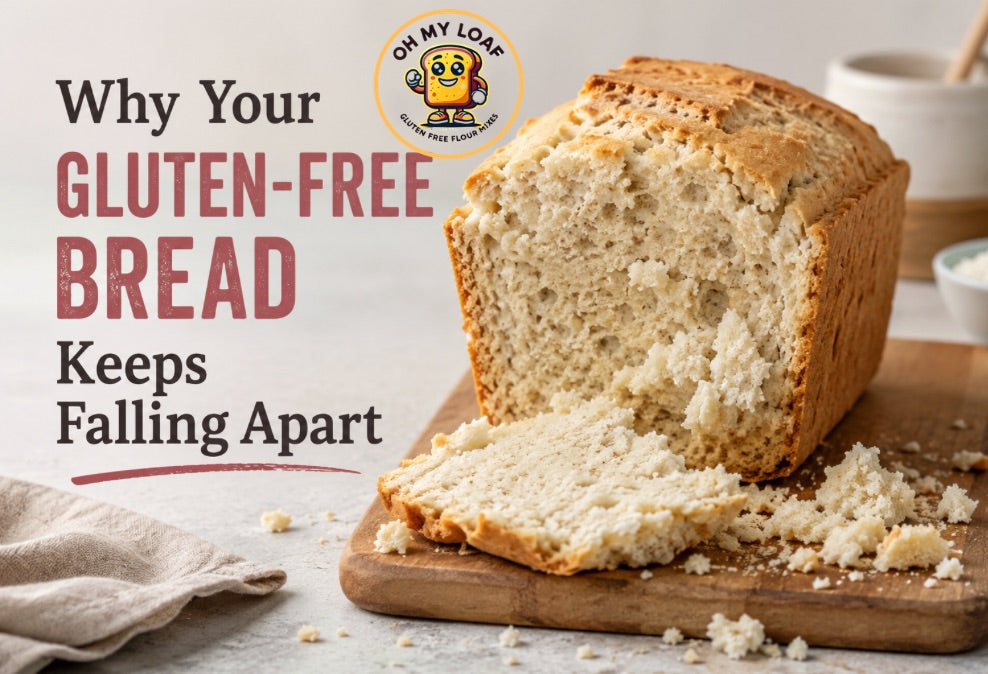
Why Your Gluten-Free Bread Keeps Falling Apart (And How to Fix It)
You lift the loaf out of the pan, it looks fine — and then it happens. A slice crumbles the second your knife touches it, or the whole loaf sort of caves in on itself when you try to pick it up. If this is your first (or fifth) gluten-free loaf and it's falling apart on you, here's the good news: it's almost never a sign you're bad at this. It's a structure problem, and structure problems have specific, fixable causes.
Why Gluten-Free Bread Struggles to Hold Together
Regular bread gets its stretch and chew from gluten — a protein network that traps air and holds everything together like a web. Take gluten out, and that web is gone.
Gluten-free bread has to borrow structure from somewhere else, usually a combination of psyllium husk, a binder (egg or a plant-based alternative, depending on the recipe), and careful hydration.
When one of those isn't doing its job, the loaf simply doesn't have anything holding it together — so it doesn't.
Here's what to check, in the order most likely to be the culprit.
Fix #1: Not Enough Binder (This Is the Big One)
Psyllium husk is doing the job gluten normally would — it's what gives gluten-free dough enough elasticity to actually hold its shape instead of crumbling into pieces.
Too little psyllium, or psyllium that hasn't fully hydrated before baking, is the single most common reason bread falls apart.
What to do: If you're building your own blend, don't eyeball this ingredient — small amounts make a big structural difference.
Give your dough a rest of 10–15 minutes after mixing so the psyllium has time to fully absorb liquid and start gelling before it goes in the oven.
If you'd rather not troubleshoot ratios at all, our Starter Kit has this balance already worked out, so structure isn't something you have to solve on your first try.
Fix #2: The Loaf Was Cut Too Soon
We know — we said this in our gummy-middle post too, and it matters here just as much. Gluten-free bread is still setting its internal structure as it cools, not just its temperature.
Slice into a warm loaf and you're cutting into something that hasn't finished becoming bread yet, which shows up as crumbling or collapsing.
What to do: Let the loaf cool fully on a wire rack before slicing — a full hour, even though it's hard to wait. If you're dealing with both a crumbly texture and a gummy center, check out our gummy-middle guide — the fixes overlap more than you'd think.
Fix #3: Too Much Flour, Not Enough Moisture
It's a common instinct to add a bit more flour if dough looks too wet — but gluten-free doughs generally need to be wetter and stickier than regular bread dough to work properly.
A dry, stiff dough doesn't bind well and tends to bake up crumbly rather than cohesive.
What to do: Resist the urge to keep adding flour to "fix" a sticky dough — gluten-free dough is supposed to look wetter than you're used to.
If you're following a mix, trust the water measurement even if it feels like too much at first.
Quick Answers
Is crumbly gluten-free bread still safe to eat? Yes — this is a texture and structure issue, not a food safety one. It's just not going to hold together the way you want for sandwiches or slicing.
Will adding an egg help binding? Egg can add binding structure in traditional gluten-free recipes, but all Oh My Loaf recipes and mixes are made without eggs, dairy, or any animal products — so that's not a fix we'd reach for.
If you're troubleshooting a non-Oh-My-Loaf recipe that uses egg, a flax egg (1 tbsp ground flaxseed + 3 tbsp water, rested a few minutes) works as a plant-based swap with similar binding power.
But for our mixes specifically, psyllium hydration and cooling time are the two things worth checking first — they're doing the binding work entirely on their own.
Does the type of pan matter here? Less than you'd think for this specific issue — pan size affects rise and bake time more than structural integrity. If your loaf is falling apart, look at binder and cooling time first.
Your Next Loaf
A loaf that falls apart isn't a sign to give up — it's almost always a binder-and-patience problem, and both are things you can dial in. Check your psyllium hydration, let it cool the full hour, and trust the wetter dough. Your next slice should hold together the way you're picturing it.
If you'd rather skip the ratio math altogether, our Starter Kit has the structure already balanced for you. And if gummy centers have been part of your bread troubles too, we've got a whole post on that — the two problems often show up together, and the fixes overlap.
You've got this.